 Image: techtimes.com
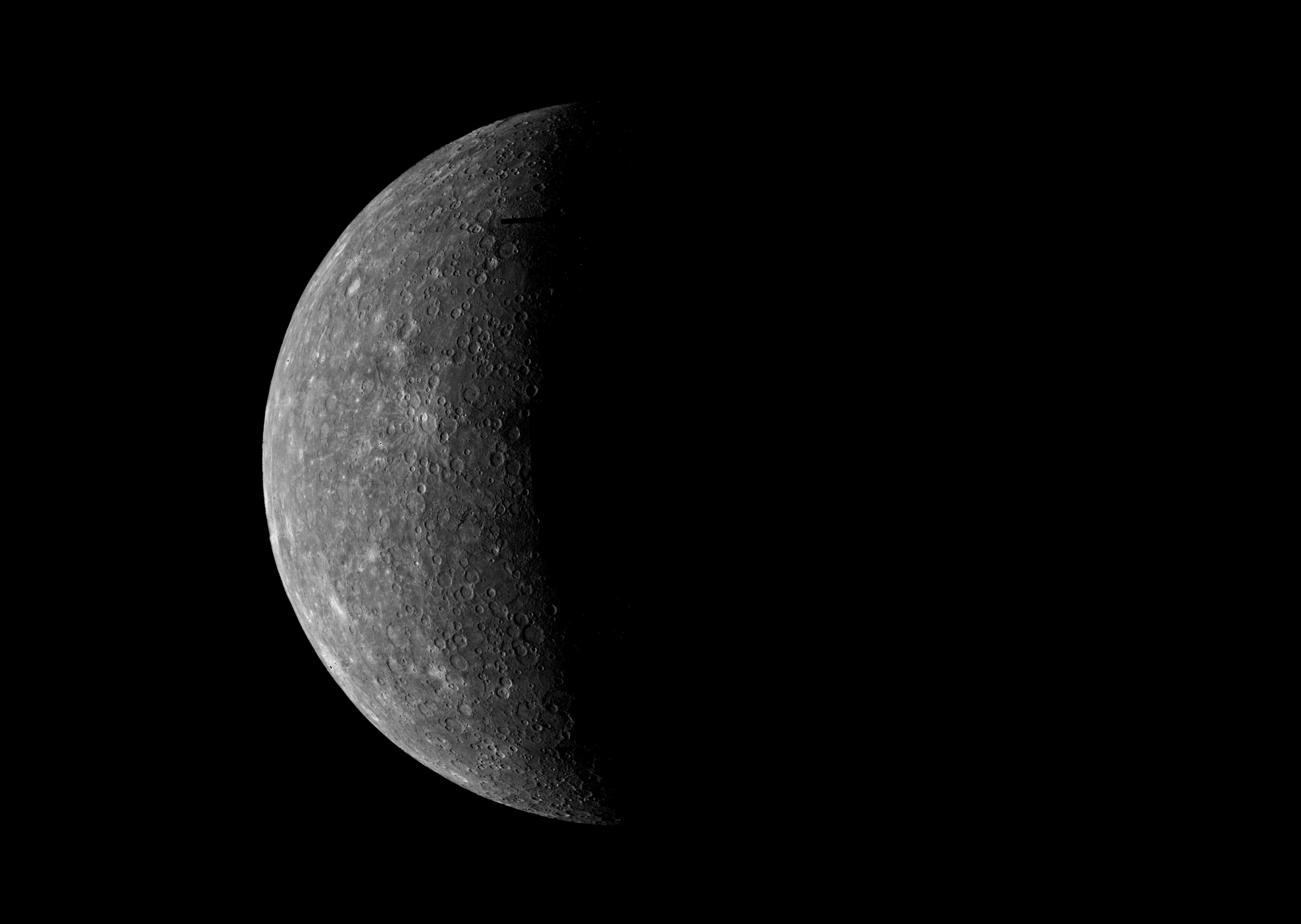
In a landmark achievement that marks a new era in exoplanet science, astronomers using NASA's James Webb Space Telescope (JWST) have directly studied the surface of a rocky planet beyond our solar system for the very first time. The target, a super-Earth called LHS 3844 b located just 48 light-years away, has been revealed as a dark, hot, and utterly barren world – more akin to a larger version of Mercury than our life-friendly Earth. Announced in early May 2026 with results published in Nature Astronomy, this discovery provides the most detailed look yet at the geology of a distant rocky planet and sets the stage for future hunts for habitable worlds.
The Breakthrough: First Direct Glimpse of an Exoplanet Surface
For years, scientists have primarily studied exoplanets by observing their atmospheres during transits or measuring their overall temperatures. Surface analysis seemed out of reach due to the immense distances and the overwhelming glare of host stars. But JWST's extraordinary sensitivity in the mid-infrared has changed that. Using the Mid-Infrared Instrument (MIRI), an international team led by Laura Kreidberg of the Max Planck Institute for Astronomy and Sebastian Zieba has captured thermal emission directly from the planet's dayside surface.
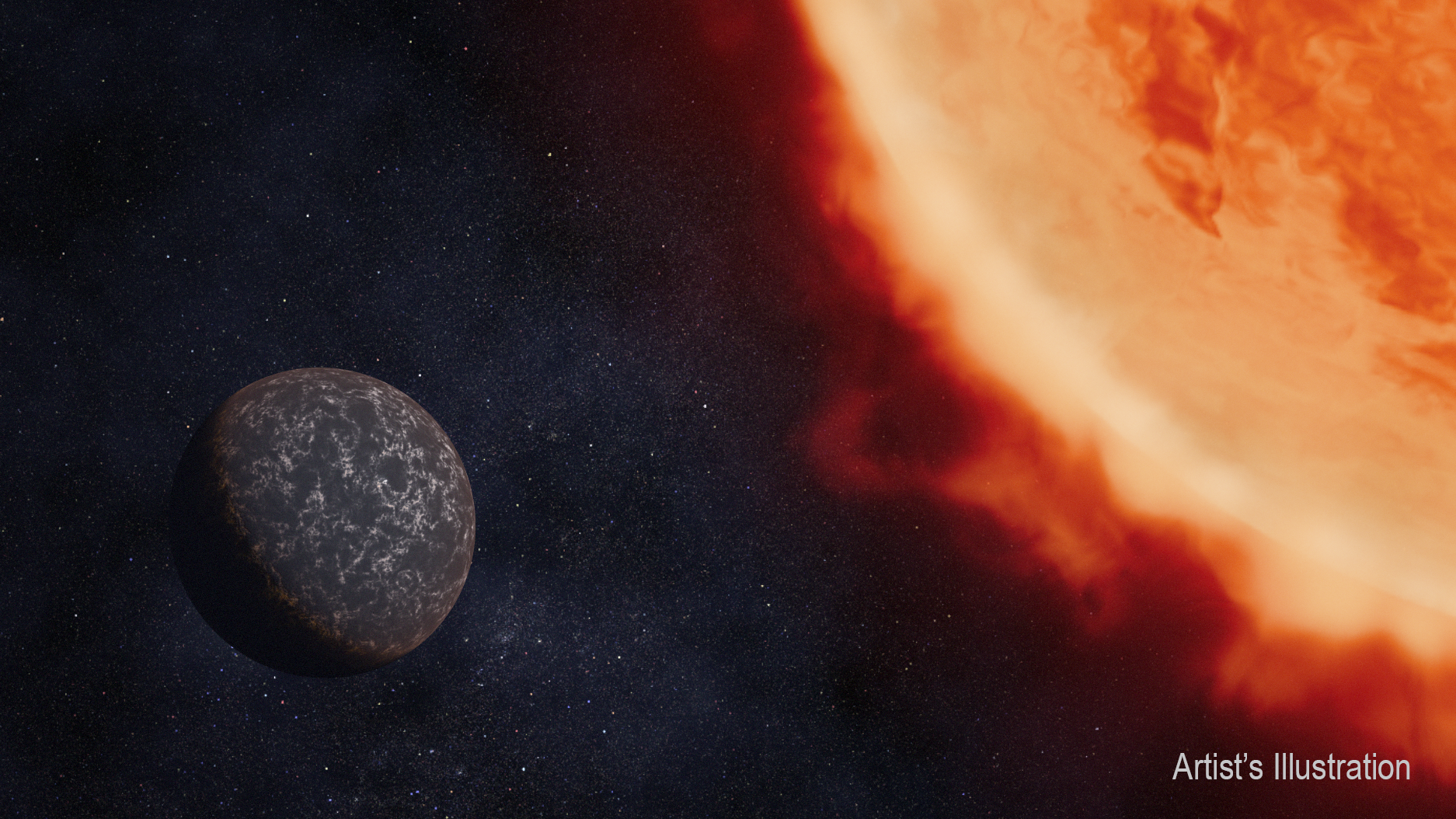 Image: news.uchicago.edu
"Thanks to the amazing sensitivity of JWST, we can detect light coming directly from the surface of this distant rocky planet. We see a dark, hot, barren rock, devoid of any atmosphere," said Kreidberg in a recent statement. The observations build on earlier Spitzer Space Telescope data but deliver far higher precision, ruling out several competing theories about the planet's nature.
This isn't just another incremental improvement – it's a methodological first. By measuring subtle changes in the combined light of the star and planet across different wavelengths, researchers created a thermal emission spectrum that essentially acts like a fingerprint of the surface composition. The flat, featureless spectrum indicates a lack of atmospheric absorption features and points to specific rock types below. Published on May 4, 2026, the study represents one of the most significant exoplanet results of the year so far.
Portrait of LHS 3844 b: A Tidally Locked Inferno
LHS 3844 b is what astronomers call a "super-Earth," with a radius about 1.3 times that of our planet. It orbits a small, cool red dwarf star extremely closely – so close that it is tidally locked, meaning one side permanently faces the star in perpetual daylight while the other remains in freezing darkness. The dayside reaches temperatures hot enough to melt lead, hovering around 800–1,000 Kelvin (roughly 980–1,340°F).
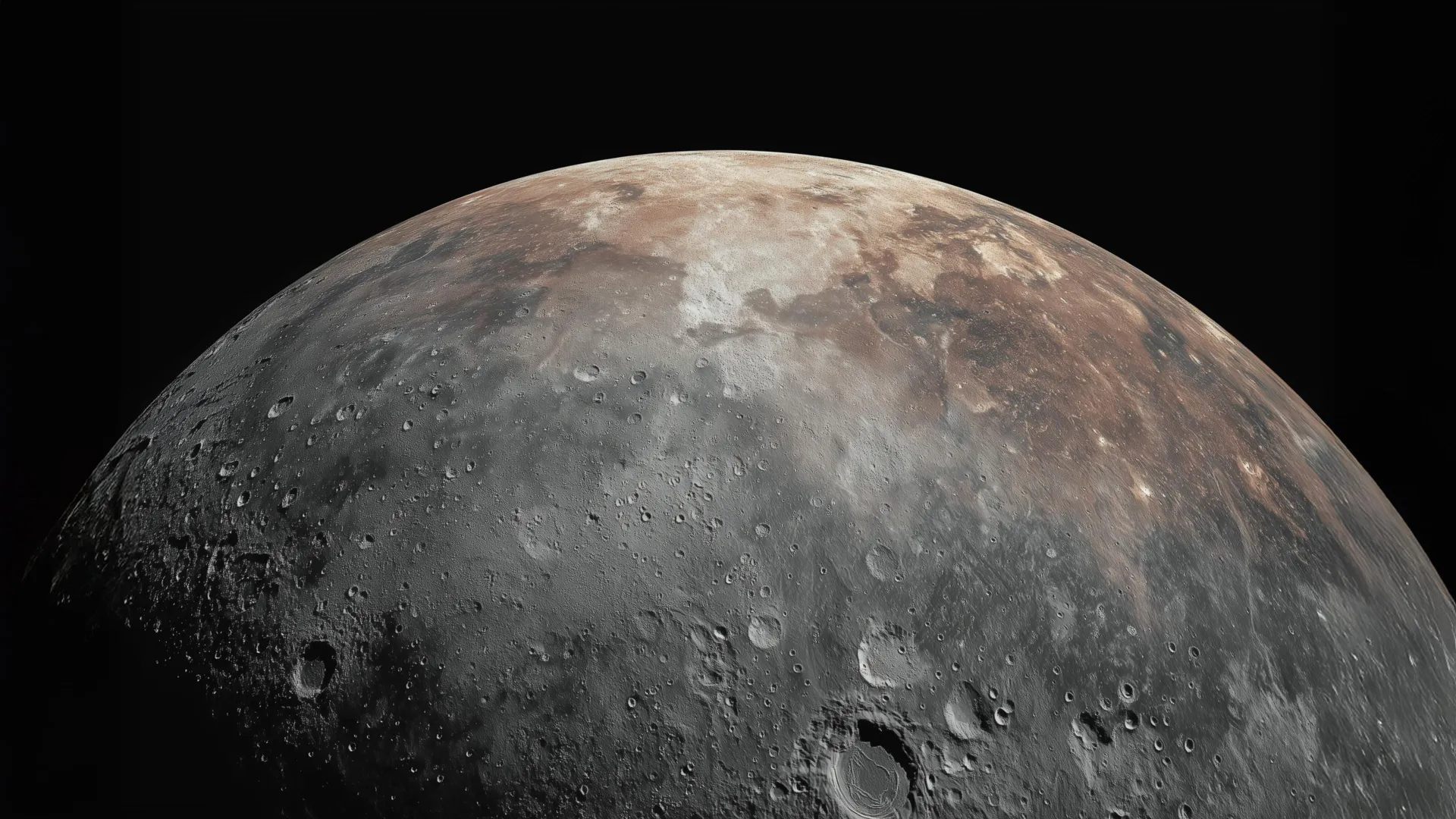 Image: sciencedaily.com
Previous hints from Spitzer suggested the planet might lack a substantial atmosphere, and JWST has now confirmed it definitively. Without an atmosphere to distribute heat or protect the surface, the dayside bakes under relentless stellar radiation while the nightside plunges into extreme cold. This creates a stark temperature contrast with almost no heat redistribution – behavior typical of a bare rock.
- Distance: 48 light-years in the constellation Indus
- Size: ~1.3 Earth radii
- Orbital period: Just 11 hours
- Surface temperature (dayside): ~1,340°F (hot enough for molten rock in places?)
- Key finding: No detectable atmosphere, dark surface with low albedo
The planet likely formed closer to its star or migrated inward over time, losing any primordial atmosphere to intense stellar winds and radiation. Its host star, though smaller than our Sun, bombards the world with high-energy flares common to red dwarfs, further stripping away potential gases.
Uncovering the Surface Composition: Basalt, Not Granite
What does the surface actually look like? The JWST data strongly favors a composition rich in basalt – dark volcanic rock made primarily of iron and magnesium silicates. This matches the mantles of rocky bodies like Earth's Moon or Mercury rather than Earth's silica-rich continental crust (think granite). The surface appears finely grained and dark, likely due to extensive "space weathering" from billions of years of cosmic radiation, micrometeorite impacts, and stellar wind.
The infrared spectrum neatly matches models of lunar-like regolith or solidified lava rock but rules out brighter, more reflective Earth-like materials. "The observational data... are consistent with mantle or lava rock, whereas they rule out an Earth-like crust," the team reported. This suggests the planet has not experienced significant water-driven geological processing or plate tectonics that would create granitic continents.
These findings carry practical insights for planetary scientists. By confirming that some rocky exoplanets are essentially giant airless cinders, researchers can better calibrate models of atmospheric retention. For instance, planets in the habitable zones of red dwarfs may need stronger magnetic fields or thicker initial atmospheres to hold onto life-supporting gases. Amateur astronomers and citizen scientists can contribute here too – projects like Planet Hunters TESS rely on public analysis of light curves to discover new worlds worthy of JWST follow-up.
Tips for staying informed: Follow JWST's official X account and NASA Exoplanet Archive for real-time updates. Tools like the Exoplanet Watch program let enthusiasts help refine orbital parameters using backyard telescopes, indirectly supporting professional observations like these.
Implications for Habitability and Exoplanet Evolution
While LHS 3844 b is clearly inhospitable, this observation refines our understanding of what makes a planet truly Earth-like. Many rocky exoplanets in the TRAPPIST-1 system or elsewhere may have started similarly but retained thin atmospheres or subsurface oceans. The absence of atmosphere on LHS 3844 b highlights the razor-thin line between a barren rock and a potentially habitable one.
This result also informs formation theories. The basalt-rich surface implies the planet experienced widespread volcanic activity early on but lacks evidence of ongoing plate tectonics. Comparing it to TOI-561 b – another ultra-hot super-Earth where JWST recently detected a thick atmosphere above a magma ocean – shows how small differences in composition, distance, or stellar history can lead to wildly different outcomes.
For astrobiology, the lesson is clear: We must prioritize multi-wavelength studies and look for subtle signs of secondary atmospheres regenerated by volcanism. The dark, featureless nature also means future direct imaging missions will need even more advanced contrast techniques to study similar worlds.
The Road Ahead: More Rocky Planets in JWST's Sights
This success with MIRI demonstrates that mid-infrared spectroscopy is a powerful tool for characterizing rocky exoplanets. Astronomers are already planning deeper observations of other nearby worlds, including those in the habitable zone where surface conditions might allow liquid water under the right circumstances.
Upcoming missions like the Habitable Worlds Observatory (concept stage) and enhanced JWST programs will build directly on these techniques. The team behind the LHS 3844 b study hopes to apply similar methods to cooler planets where thinner atmospheres or even surface minerals indicative of life (such as certain biosignatures) might be detectable.
As Laura Kreidberg noted, we're entering an era where geology on exoplanets is no longer theoretical. "We're moving from just detecting planets to truly understanding what they're made of." With each new observation, our map of the cosmos becomes richer and more detailed.
In conclusion, JWST's first direct surface analysis of LHS 3844 b isn't just a technical triumph – it's a profound reminder of both the diversity of worlds in our galaxy and the resilience of scientific ingenuity. As we continue exploring, one rocky planet at a time, we edge closer to answering whether Earth is truly unique or part of a much larger family of living worlds. The dark, weathered basalt of LHS 3844 b may not host life, but it illuminates the path toward finding those that might. Keep watching the skies; the next revelation could be just one observation away.