 Image: thehackernews.com
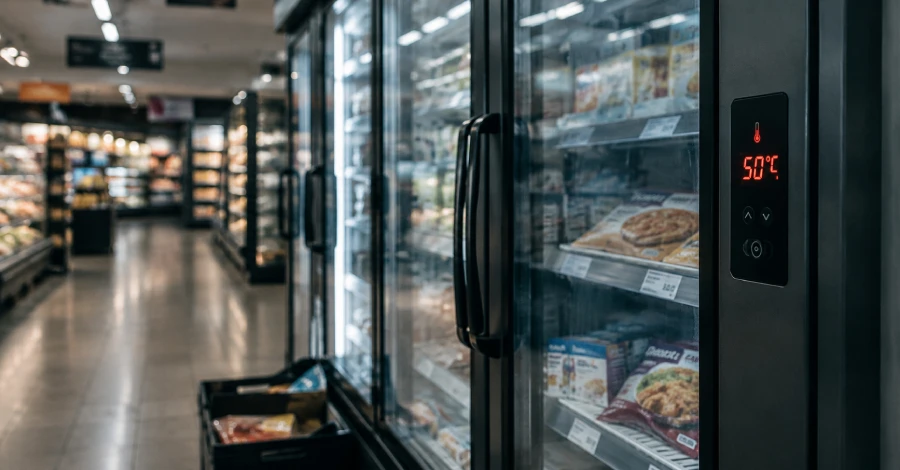
Store staff across Europe arrived to a costly mess on November 2, 2026. Overnight, refrigerators and freezers at dozens of supermarkets had been remotely pushed into defrost or heating modes. In several stores, temperatures climbed as high as 50 degrees Celsius (122 degrees Fahrenheit). Meat, dairy, and frozen goods that could no longer be guaranteed safe were pulled from sale and thrown out. This was not a string of local equipment failures. It was the latest chapter in a cyber campaign that first hit French grocers in mid-October and has since moved across the continent.
Retailers in Belgium, Luxembourg, Sweden, Ireland, the Netherlands, Estonia, and Finland reported problems. EU Agriculture Commissioner Christophe Hansen called the repeated attacks deeply concerning and “a deliberate attempt to disrupt our food supply chain and undermine consumers’ confidence in it.” By November 5, U.S. agencies had warned that industrial refrigeration and cold-chain systems worldwide are under active threat.
What Happened Overnight on November 2
The second wave unfolded between Sunday night and Monday morning. Attackers reached internet-connected temperature controllers and forced cooling equipment out of its normal range, often by triggering defrost cycles. Many stores discovered the damage hours later, sometimes only after staff opened for the day.
 Image: breachnews.com
Belgium absorbed a heavy share of the impact. Ahold Delhaize said an IT incident affected refrigeration at several dozen stores, mainly in Belgium with a smaller number in Luxembourg. Local reporting put the Delhaize figure at around 40 locations. Carrefour said 15 of its roughly 700 Belgian stores were hit, largely in freezer sections, while stores stayed open. Colruyt reported problems at about five independently run Spar shops. One IKEA store in Belgium was also affected.
In Sweden, ICA and Coop confirmed incidents. Coop said seven of about 800 stores saw unauthorized tampering with refrigeration systems, and noted Danfoss among its suppliers. At least one ICA franchise reported freezers set to 50°C after a 2 a.m. intrusion. A Stockholm store manager told Reuters that “everything is destroyed.” Ireland’s SuperValu, part of Musgrave, said a specific refrigeration model was affected at 13 of 223 stores, and chilled and frozen products were removed from sale. In Estonia, a Selver outlet saw a freezer driven to 50°C; a local supplier said staff responded within minutes and limited the damage. Finland’s Kesko said it was investigating irregular temperatures at a few smaller shops. Dutch businesses, including some butcher shops using similar controllers, also reported problems.
Losses varied by site. The owner of Belgian butcher chain De Laet & Van Haver said he was woken at 3:30 a.m. and later put ruined meat at one store at about 15,000 euros. Larger chains have not published a single continent-wide damage figure for the November wave, but national cybersecurity centers opened investigations because the pattern matched the French attack so closely.
France Was the Warning, Not the Exception
The November incidents echoed an attack on the night of October 11–12, 2026, that hit hundreds of French supermarkets. Chains including Intermarché, Coopérative U, Carrefour, Monoprix, E.Leclerc, and Netto were among those affected. Some accounts put the total as high as about 700 stores. Hackers seized control of cooling units, held some at temperatures as high as 50°C for hours, and overheating was linked to fires at some locations. French losses were estimated in the tens of millions of euros.
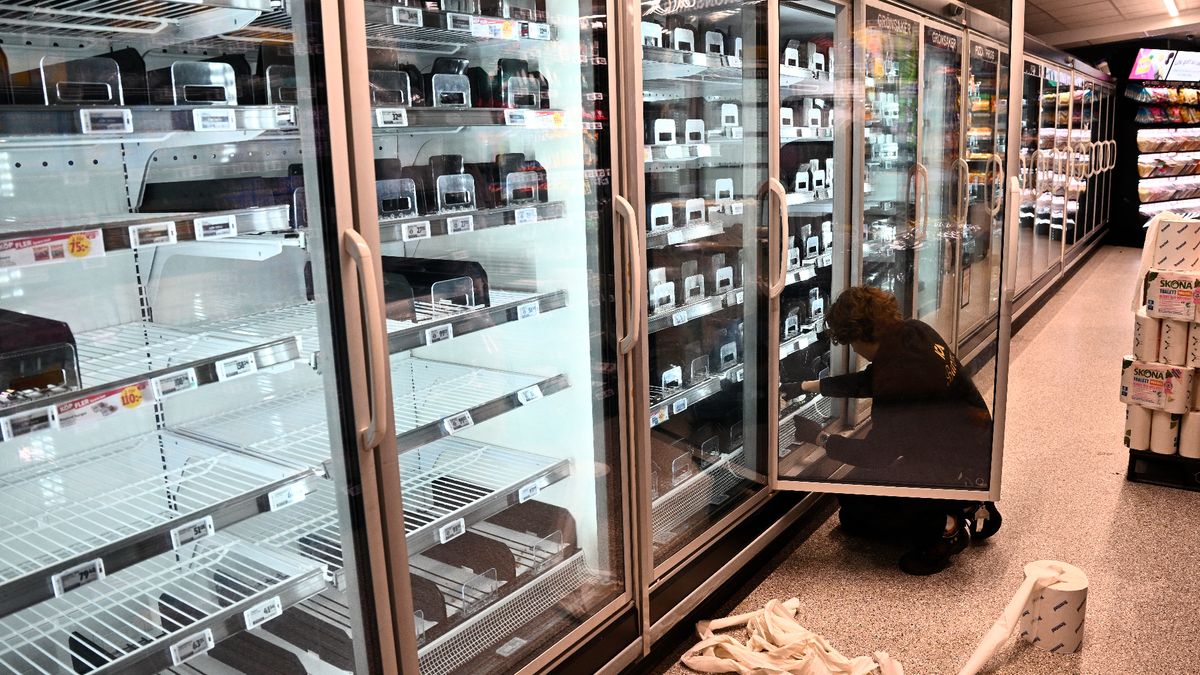 Image: tomshardware.com
France’s CERT-FR and Spain’s INCIBE-CERT later noted compromises involving controllers from vendors including Danfoss, Copeland, and Dixell. Officials warned that related activity might still be active and urged operators to take equipment off the open internet, restore and reconfigure compromised devices, update firmware, change default passwords, and allow remote access only through a protected network.
Danish manufacturer Danfoss has said many affected units were older products that no longer received security updates, and that customers had been told to migrate or update. Belgian refrigeration firm Sabcobel said November’s damage in its market could have been worse because some operators had already started patching after France. Even so, exposed or lagging systems were still reachable. On November 3, Reuters reported that chains were rushing to upgrade controllers, disconnect hacked units, and move some links off older mobile connections.
Exposed Controllers, Not a Complex Malware Plot
Investigators and vendors have described a relatively direct path. Supermarket refrigeration is often managed by central controllers with web interfaces so staff and maintenance contractors can monitor circuits and adjust settings from afar. When those controllers sit on the public internet, run outdated firmware, or still use factory-default credentials, an attacker does not need custom malware to change a setpoint or force a defrost cycle. Researchers have said the October attackers did not appear to leave malicious code on the devices, which also makes attribution harder.
Coop has said some affected fridges were linked over 4G connections that left them more exposed, and it has been shifting systems toward newer connectivity. ICA said the stores hit on November 2 used equipment connected outside the chain’s centrally managed network. Threat researchers, including teams watching decoy controllers, reported login attempts that often used publicly documented default credentials in the days before the November wave. That helps explain why a second strike could land weeks after the first: the pool of exposed devices was large, and not every operator had finished locking systems down.
Who did it remains officially unresolved. No government has publicly named a culprit. Around November 3 and 4, pro-Russian hacktivist groups NoName057(16) and Z-Pentest posted claims of responsibility, including allegations about vendor-related logins. Those posts were later deleted, and the claims have not been independently verified. Danfoss has said it had no evidence its own internal systems were breached. On November 5, Kremlin spokesman Dmitry Peskov called suggestions of Russian involvement “absurd” and unfounded. Some researchers, including Lupovis CEO Xavier Bellekens, have said technical clues fit a Russian-linked actor. Others note that Iranian-aligned groups have previously targeted food-related systems. European agencies, including ENISA, have stressed information-sharing across member states rather than a public attribution.
Blood Banks, Military Stores, and a U.S. Warning
The same class of equipment sits under more than grocery aisles. On November 3, France’s national blood service, the Établissement Français du Sang, confirmed that a cybersecurity incident affecting a refrigeration provider had altered temperature and defrost settings at three storage sites. Staff intervened before blood products or samples were compromised. The near miss showed how a controller problem can move from spoiled food to medical supply risk in a single night.
Reporting has also said the Pentagon is investigating freezer malfunctions at U.S. military commissaries. Separately, some UK meat suppliers were reported as targeted through refrigeration controls, with no stock losses confirmed in those cases. On November 5, CISA, the FBI, the Department of Health and Human Services, the Department of Agriculture, and the Department of Transportation issued a joint fact sheet on ongoing malicious activity against industrial refrigeration and cold-chain monitoring systems. The agencies said actors may exploit authentication weaknesses, code-injection flaws, and weak configurations on unpatched or internet-accessible controllers, then force units into continuous heating or defrost cycles. Possible results include inventory loss, shorter equipment life, and fire hazards.
CISA’s acting cybersecurity leadership said every organization that depends on refrigeration and monitoring should assume it could be a target. Internet scans cited by researchers suggested thousands of refrigeration controllers had been exposed earlier in the fall, with the number still reachable from the web falling after operators began disconnecting devices. The advisory covers grocery, cold storage, healthcare, chemicals, and refrigerated transport — not only European supermarket chains.
What Retailers and Cold-Chain Operators Should Do Now
The useful response is basic operational-technology hygiene, not a single miracle patch. U.S. and European guidance lines up on a short list that store groups and their contractors can act on this week:
- Find every refrigeration and temperature controller reachable from the internet and remove access that is not required. Remote maintenance should use a secured path, not an open web page.
- Change factory-default passwords immediately and use strong, unique credentials. Ask refrigeration contractors who holds remote access and how technicians connect.
- Apply available firmware updates. If a vendor no longer supports a controller, plan to replace it rather than leave it online.
- Separate operational equipment from corporate networks so a foothold in one environment does not automatically reach the other.
- Set hard limits on temperature setpoints so a compromised interface cannot drive a cabinet far outside a safe range, and alert on deviations.
- Treat a sudden temperature alarm as a possible security event, not only a maintenance call. Decide in advance who checks cabinets overnight, who can cut remote access, and who authorizes food disposal.
Franchise stores and independent shops are especially exposed. The controller may have been installed and remotely serviced by a third party the owner rarely audits. One warm freezer looks like a broken sensor. The same failure at dozens of sites on the same night is a campaign. Jason Brown, a former U.S. Secret Service cyber investigator, has urged grocers to put those three contractor questions — internet exposure, default credentials, and remote-access method — to their maintenance providers now.
Cold Storage Is Now a Cyber Target
As of November 7, 2026, European authorities are still investigating, retailers are disconnecting and upgrading controllers, and no actor has been officially charged with the supermarket attacks. What is already clear is the cost of treating cold storage as a convenience feature rather than part of the food supply’s critical path. Spoiled inventory, damaged cabinets, and shaken shopper trust do not require a stolen database. They require a temperature setting that nobody locked down.
The November wave hit fewer stores than the French outbreak, in part because some operators moved after October. It was still large enough to empty freezers from Stockholm to Brussels and to pull U.S. cyber, health, agriculture, and transport agencies into the same advisory. Grocery groups, cold-storage warehouses, hospitals, blood services, and anyone who ships temperature-sensitive goods now have a concrete example of what an exposed controller can do before breakfast. The next useful step is not rumor about who turned the dial. It is making sure the next dial is no longer sitting on the open internet.