 Image: forums.developer.nvidia.com
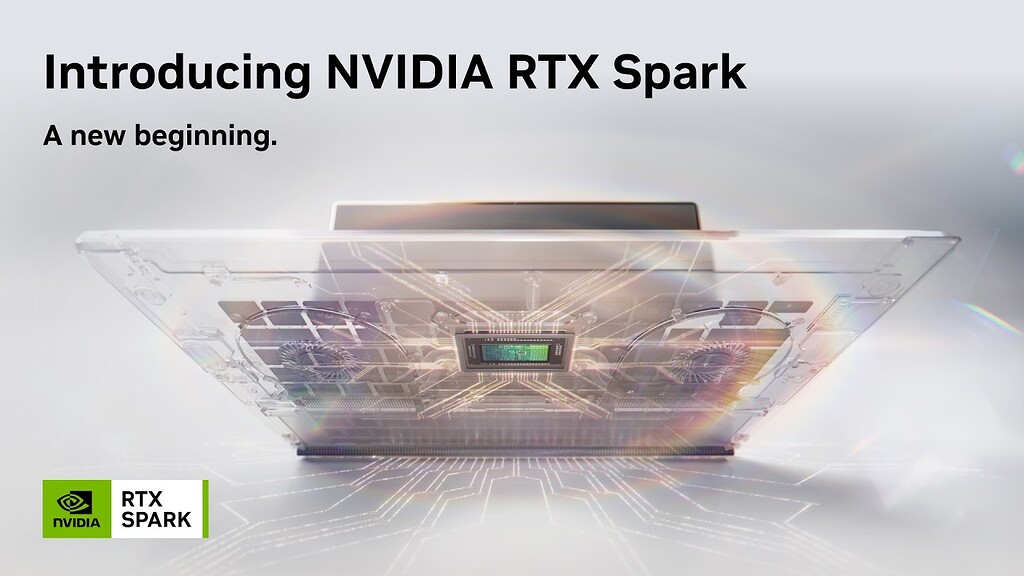
In a landmark announcement at NVIDIA GTC Taipei during Computex 2026 on May 31, NVIDIA introduced the RTX Spark superchip, marking a bold entry into the consumer PC market with a purpose-built platform for the era of personal AI agents. This innovative Arm-based SoC fuses NVIDIA's Blackwell RTX graphics architecture with a high-performance Grace CPU, delivering up to 1 petaflop of FP4 AI performance, 6,144 CUDA cores, and up to 128GB of unified memory—all in ultra-efficient designs for slim laptops as thin as 14mm and small-form-factor desktops.
The launch represents NVIDIA's vision of transforming Windows PCs from passive tools into proactive teammates capable of running sophisticated on-device AI agents locally, with full support for creative workflows, AAA gaming, and AI development. Partnering closely with Microsoft, the platform emphasizes security, performance-per-watt leadership, and seamless integration with Windows advancements like neural rendering and enhanced ray tracing.
Core Specifications and Technical Breakthroughs
At the heart of RTX Spark is the NVIDIA GB10 Grace Blackwell superchip (also referenced as N1X in some reports). It integrates up to 20 ultra-efficient Arm CPU cores with a Blackwell RTX GPU featuring fifth-generation Tensor Cores optimized for FP4 precision. This unified memory architecture—reaching 128GB of LPDDR5X—allows the GPU to access system memory directly, accelerating large AI models with up to 200 billion parameters locally.
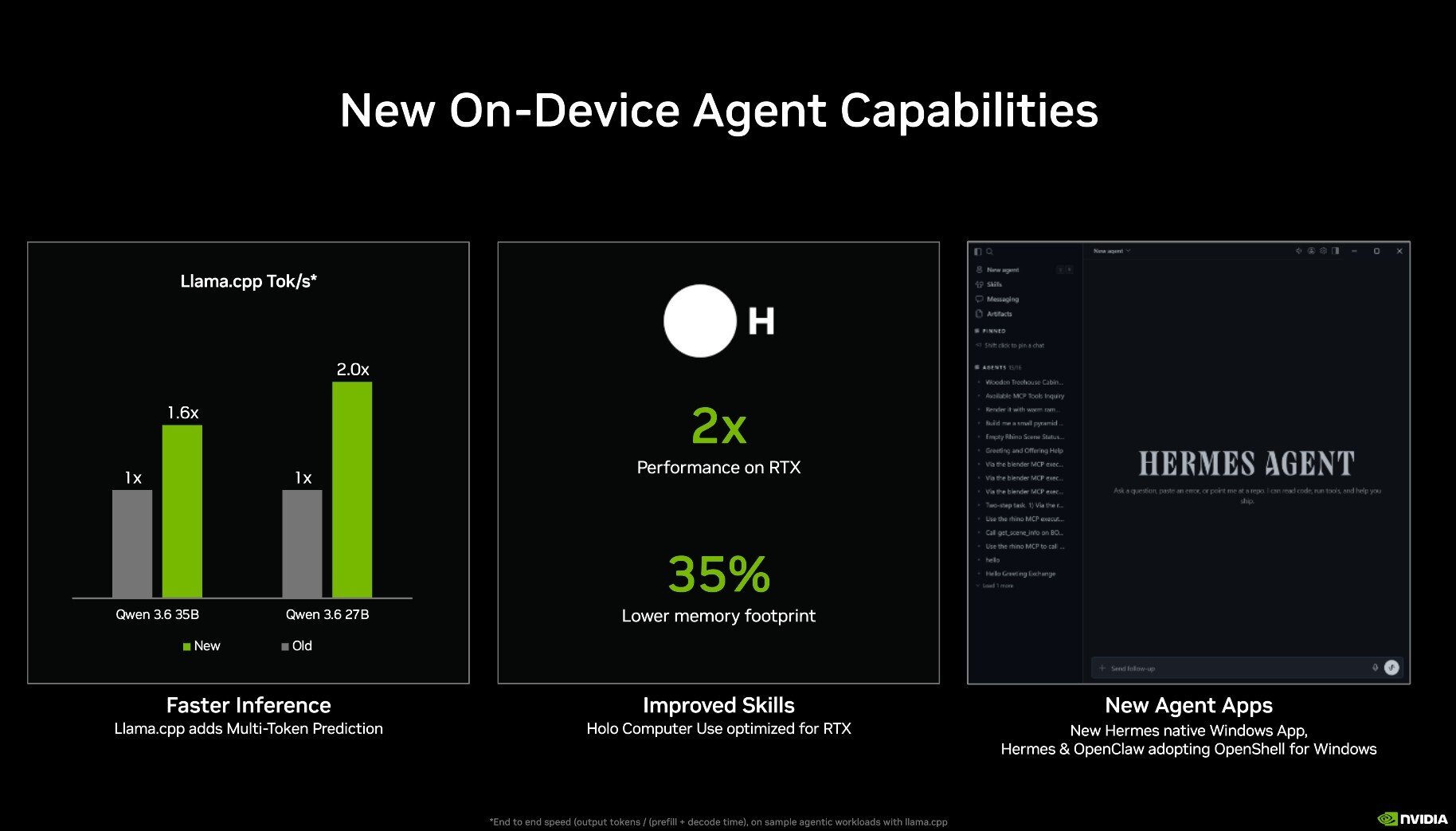 Image: techpowerup.com
Key performance highlights include:
- Up to 1 petaflop of FP4 AI compute for agentic workloads and inference.
- Industry-leading power efficiency for all-day battery life in thin-and-light laptops.
- Native CUDA, TensorRT, OptiX, and DLSS support for developers and creators.
- Enhanced gaming features including anti-cheat compatibility for titles like Fortnite and VALORANT, plus optimizations for DirectX 12 neural rendering.
This design draws from NVIDIA's enterprise DGX Spark mini-workstation but is optimized for consumer Windows on Arm experiences, including a dedicated NPU for Copilot+ features while the GPU handles heavy lifting.
Microsoft Partnership and the Rise of Personal AI Agents
NVIDIA and Microsoft are collaborating to build a secure, agent-centric Windows platform on RTX Spark. New OS security primitives and NVIDIA OpenShell enable robust on-device agents that operate privately without constant cloud dependency. This shift promises more responsive, personalized computing—think AI that anticipates needs, automates tasks, and collaborates in real-time while maintaining enterprise-grade security.
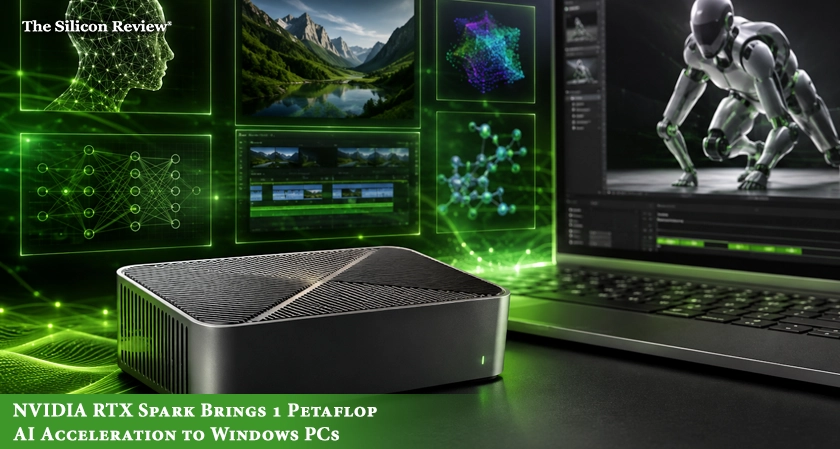 Image: thesiliconreview.com
Windows blogs highlight how RTX Spark accelerates the evolution toward "agentic" interfaces, with full-stack NVIDIA AI technologies tuned for local execution. Developers gain access to familiar CUDA tools, while everyday users benefit from enhanced creativity tools and gaming performance in power-sipping form factors.
Availability, Partners, and Market Rollout
RTX Spark-powered devices are slated for release this fall (2026) from premier manufacturers including ASUS, Dell, HP, Lenovo, Microsoft Surface, and MSI, with Acer and GIGABYTE models following. Expect premium thin laptops and ultra-compact desktops emphasizing sleek designs, high-resolution displays, and sustained performance for AI, content creation, and gaming.
Early previews and manufacturer collaborations, including with MediaTek on CPU elements, signal strong ecosystem support. Pricing and exact configs remain under wraps, but the focus on efficiency positions these as competitors to high-end Arm-based systems while delivering RTX-level graphics punch.
Practical Insights and Tips for Users and Developers
For professionals eyeing RTX Spark systems:
- AI Developers: Leverage unified memory and CUDA for running large local models—ideal for privacy-sensitive inference or prototyping agents without data center access.
- Creators and Gamers: Benefit from DLSS, ray tracing, and anti-cheat support in slim devices; test power profiles for optimal battery vs. performance in mobile scenarios.
- Everyday Users: Look for Copilot+ certified models with strong agent features; ensure compatibility with existing Windows apps via the Arm ecosystem improvements.
- Procurement Tip: Monitor fall launches for configs with maximum unified memory (up to 128GB) if handling heavy AI workloads.
Early adopters should verify driver support and test local AI agent demos once available to maximize the platform's unique strengths.
Broader Implications for the PC Industry
The RTX Spark announcement intensifies competition in the AI PC space, bringing supercomputer-grade capabilities to portable form factors. It underscores NVIDIA's strategy to extend its AI dominance from data centers to the edge, potentially accelerating Windows on Arm adoption and challenging traditional x86 dominance in high-performance laptops.
With Computex buzz still fresh as of June 2026, industry analysts anticipate significant ripple effects on pricing, form factors, and software optimization across the ecosystem.
In conclusion, NVIDIA's RTX Spark superchip heralds a transformative chapter for personal computing, blending raw power, efficiency, and AI intelligence in elegant hardware. As devices hit shelves this fall, users and developers alike stand to gain unprecedented on-device capabilities—positioning these systems as essential tools in an increasingly agent-driven digital world.