 Image: tomshardware.com
I couldn't help but vigorously pump my fist in the air when Intel announced its partnership with Elon Musk's empire on the Terafab project just days ago. On April 7, 2026, Intel confirmed it would join Tesla, SpaceX, and xAI in this massive $20-25 billion semiconductor initiative in Austin, Texas, aimed at producing a staggering 1 terawatt of AI compute per year. This isn't just another supplier deal—it's a bold recognition that in the age of AI, robotics, and autonomous everything, smart players collaborate with visionaries instead of vainly trying to reinvent the wheel.
Remember when Ford and General Motors could have partnered with a fledgling Tesla on electric vehicles? Instead, they scoffed, doubled down on internal combustion engines, and watched Tesla rewrite the auto industry. Intel, to its credit, appears to have learned that lesson. By jumping into Terafab early, they're positioning themselves at the heart of the next industrial revolution. In this editorial, I'll break down why this move makes perfect sense, what it teaches us about innovation, and why the auto giants' EV blunder remains one of the worst strategic failures in modern business history.
The Terafab Bombshell: Scaling AI Compute Like Never Before
Let's start with the news itself, which broke just yesterday in tech time. Musk first teased Terafab in March 2026 as a vertically integrated chip manufacturing mega-facility that would design, fabricate, package, and test custom silicon under one roof. The goal? Powering everything from Optimus humanoid robots and Full Self-Driving (FSD) systems at Tesla to Grok training at xAI and even space-based AI compute for SpaceX satellites and orbital data centers.
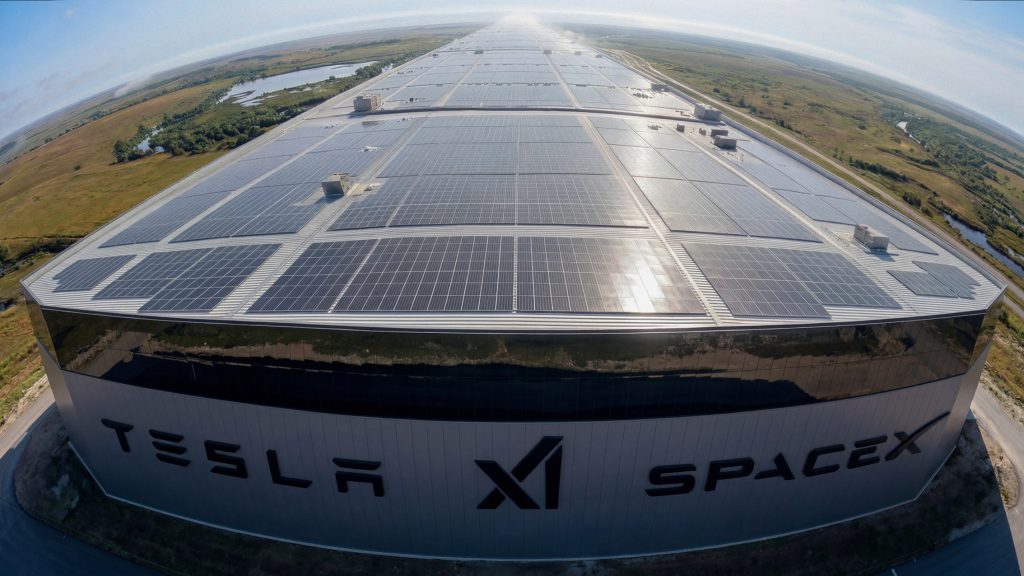 Image: driveteslacanada.ca
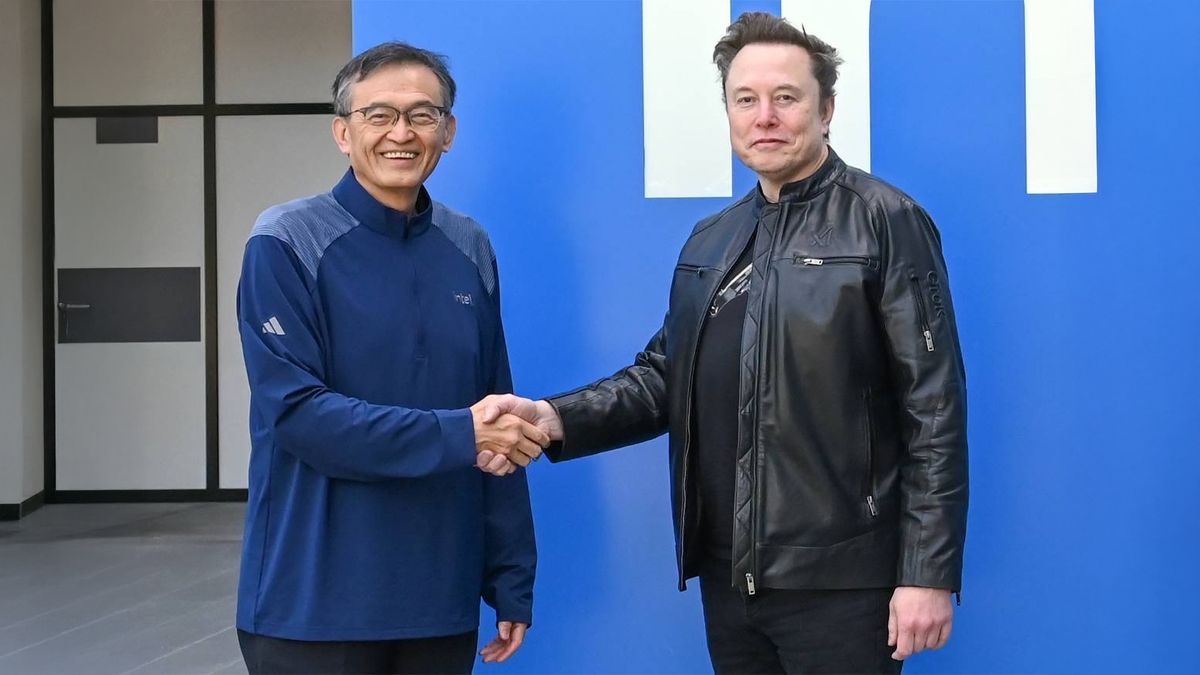
Intel's involvement brings serious manufacturing muscle. The company stated it will help "design, fabricate, and package ultra-high-performance chips at scale" to hit that 1 TW/year target. Intel CEO Lip-Bu Tan met with Musk at Intel's campus recently, and both sides posted photos and glowing comments about refactoring silicon fab technology for the AI age. This comes after Tesla's Dojo supercomputer project was paused in 2025 only to be revived in early 2026 with a focus on space applications.
What makes Terafab different is the co-location of design and manufacturing. Traditional foundries like TSMC excel at production but can be slow for rapid iteration. By combining Musk's companies' chip design expertise with Intel's process technology and high-volume fabrication know-how, Terafab could dramatically accelerate innovation cycles. Intel shares jumped on the news, a clear market endorsement that this partnership validates their foundry ambitions at a time when many were questioning them.
Ford and GM's EV Blunder: When Arrogance Meets Disruption
Now, let's talk about the elephant in the room—or should I say the Hummer EV in the showroom. Back in the 2000s and early 2010s, Tesla was a quirky upstart building expensive sports cars. Ford and GM had decades of experience, massive balance sheets, and global supply chains. A partnership where Tesla provided EV technology and the Detroit giants scaled manufacturing could have accelerated the transition to electric vehicles by a decade while giving both legacy players a head start.
 Image: 247wallst.com
Instead, what did we get? Dismissal. GM's then-CEO called Tesla's prospects "very limited." Ford bet heavily on hybrids and trucks while dragging its feet on serious EV platforms. The result? Tesla is now worth more than both combined at various points, dominates the premium EV market, and is expanding into energy, robotics, and AI. Ford and GM spent billions playing catch-up with models plagued by software issues, battery problems, and lackluster demand—issues Tesla had already solved years earlier.
The parallel to today's semiconductor and AI race is obvious. The auto giants treated Tesla as a niche competitor rather than a technology partner. They wanted to control everything internally, a classic case of "not invented here" syndrome. Intel is avoiding this trap. By partnering with Musk's ecosystem on Terafab, they're gaining access to enormous demand volume from Tesla's robotaxis, Optimus fleet (potentially billions of inference chips), and xAI's training clusters. This isn't subservience—it's symbiotic.
Why Intel's Strategy is the Antidote to Legacy Thinking
Critics might argue Intel is desperate, handing over its crown jewels to a mercurial billionaire. I see it differently. Intel's foundry business has struggled to gain external customers despite heavy investment in nodes like Intel 18A. Terafab provides guaranteed scale, real-world data from bleeding-edge AI applications, and a high-profile win that could attract more partners.
This deal acknowledges a fundamental truth about the AI era: compute is the new oil, and no single company can refine it alone at the volumes required. Tesla needs customized AI accelerators beyond what NVIDIA can supply. Intel needs high-volume production to perfect its processes and amortize R&D costs. Together, they're betting on American semiconductor leadership against geopolitical risks with Taiwan and TSMC.
Contrast this with how Ford and GM operated in silos. Had they partnered early with Tesla—perhaps licensing battery tech or co-developing platforms—they might have leapfrogged Toyota and Volkswagen in EVs. Instead, they're now licensing Tesla's NACS charging standard as a reluctant admission of defeat. Intel is getting ahead of that curve.
- Practical Insight for Tech Leaders: Identify your "unfair advantage" partners early. If you're weak in manufacturing, find a Musk-like visionary with demand. If you're design-heavy, secure fab partners before capacity becomes scarce.
- Investor Tip: Watch companies that pursue strategic ecosystems over pure competition. The Terafab news already boosted Intel's stock; similar moves in AI supply chains will define winners over the next decade.
- For AI/ML Practitioners: This scale of compute could democratize access to training massive models. Expect breakthroughs in robotics and multimodal AI as Terafab comes online.
Broader Implications: Rewriting the Rules of Tech Competition
The Terafab project isn't happening in isolation. It builds on Tesla's restarted Dojo 3 efforts and xAI's aggressive GPU clusters. By integrating logic, memory (like HBM), advanced packaging, and even photomasks in one facility, it aims for unprecedented speed from design tweak to deployment. This could challenge NVIDIA's dominance in AI inference and training hardware while strengthening U.S. supply chain resilience.
Of course, execution risks remain huge. Building a leading-edge fab is notoriously difficult—yields, equipment, talent. Musk's projects often face delays. Yet the humility in Intel's announcement—"proud to join" and "help refactor silicon fab technology"—suggests a collaborative spirit that bodes well.
Other perspectives deserve acknowledgment. Some analysts worry this distracts Intel from competing directly with TSMC or Samsung. Others see it as Tesla getting a bailout for its in-house chip ambitions. Fair points. But in my view, pure vertical integration is often a myth at this complexity level. True vertical integration in 2026 means smart horizontal partnerships.
Time to Choose: Partner or Perish in the AI Age
The Ford and GM EV story should haunt every executive in technology and manufacturing today. They had the resources, the market position, and the warning signs. Their failure wasn't technological—it was cultural. Arrogance prevented them from seeing Tesla as a potential ally rather than an existential threat until it was too late.
Intel, by contrast, is demonstrating the mindset required for success in deep tech: pragmatic, forward-looking, and collaborative. The Terafab partnership won't solve all of Intel's challenges, but it signals they're serious about becoming the foundry powerhouse America needs as AI demand explodes.
As we hurtle toward a future filled with autonomous robots, orbital data centers, and AI that rivals human intelligence, the winners will be those who partner wisely from the beginning. Intel gets it. Ford and GM eventually learned the hard way. Let's hope the rest of the industry is paying attention. The Terafab alliance isn't just good news for Intel and Tesla—it's a blueprint for thriving in the age of exponential technology.
What's your take? Should more companies follow Intel's lead and partner with disruptors like Musk's ventures?